Steam Machine Prints
A second brand on the Flowz.Studio engine, with its own shop and one shared backend
- Role
- Our own brand
- Sector
- E-commerce & 3D printing
- Service
- Web Development
The work
- Brand storefront
- 3D photo builder
- Shared Medusa backend
- Shared checkout
- Print-to-order flow
-
1
backend for two brands
-
29
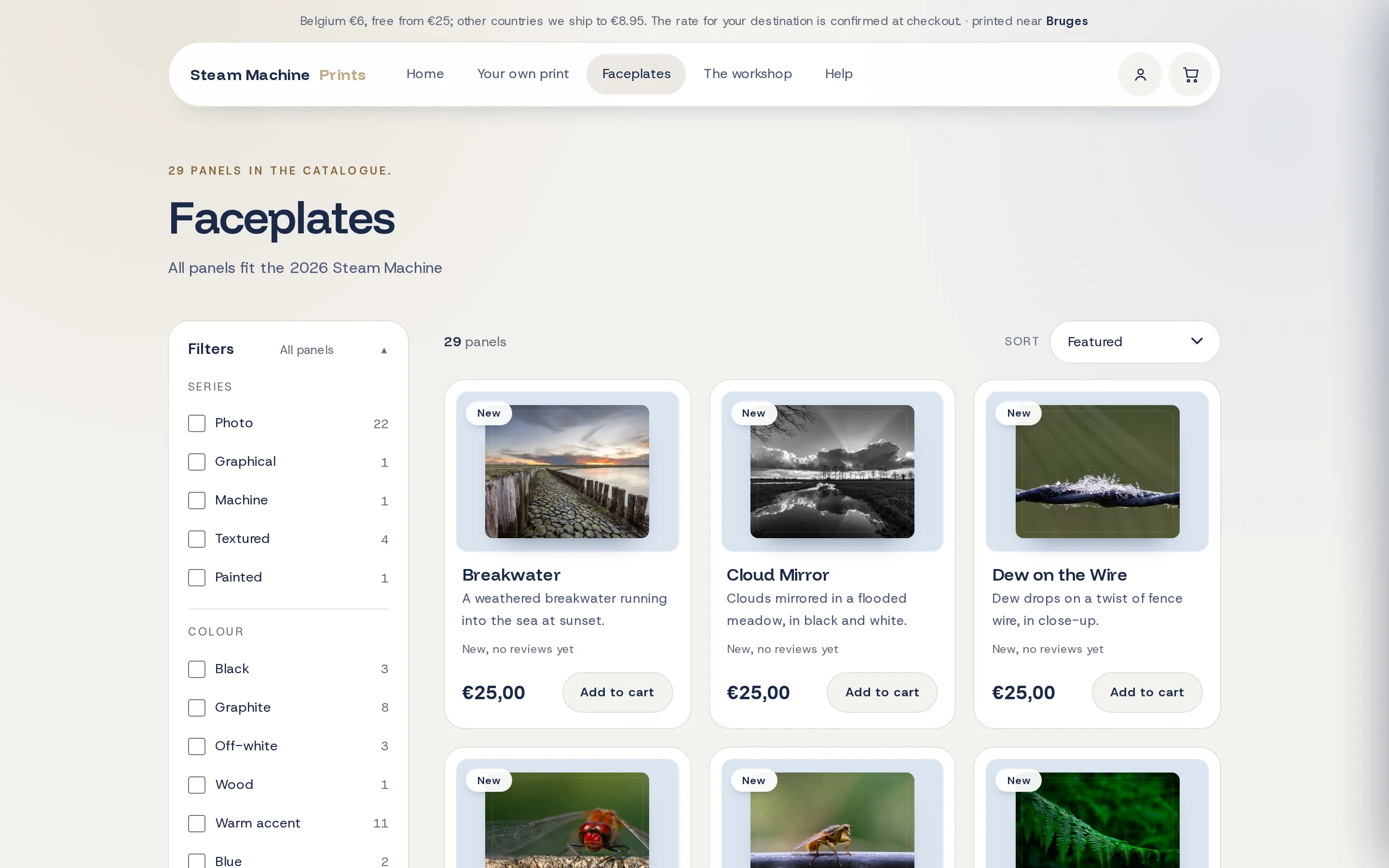
ready-made designs
-
8
countries we ship to
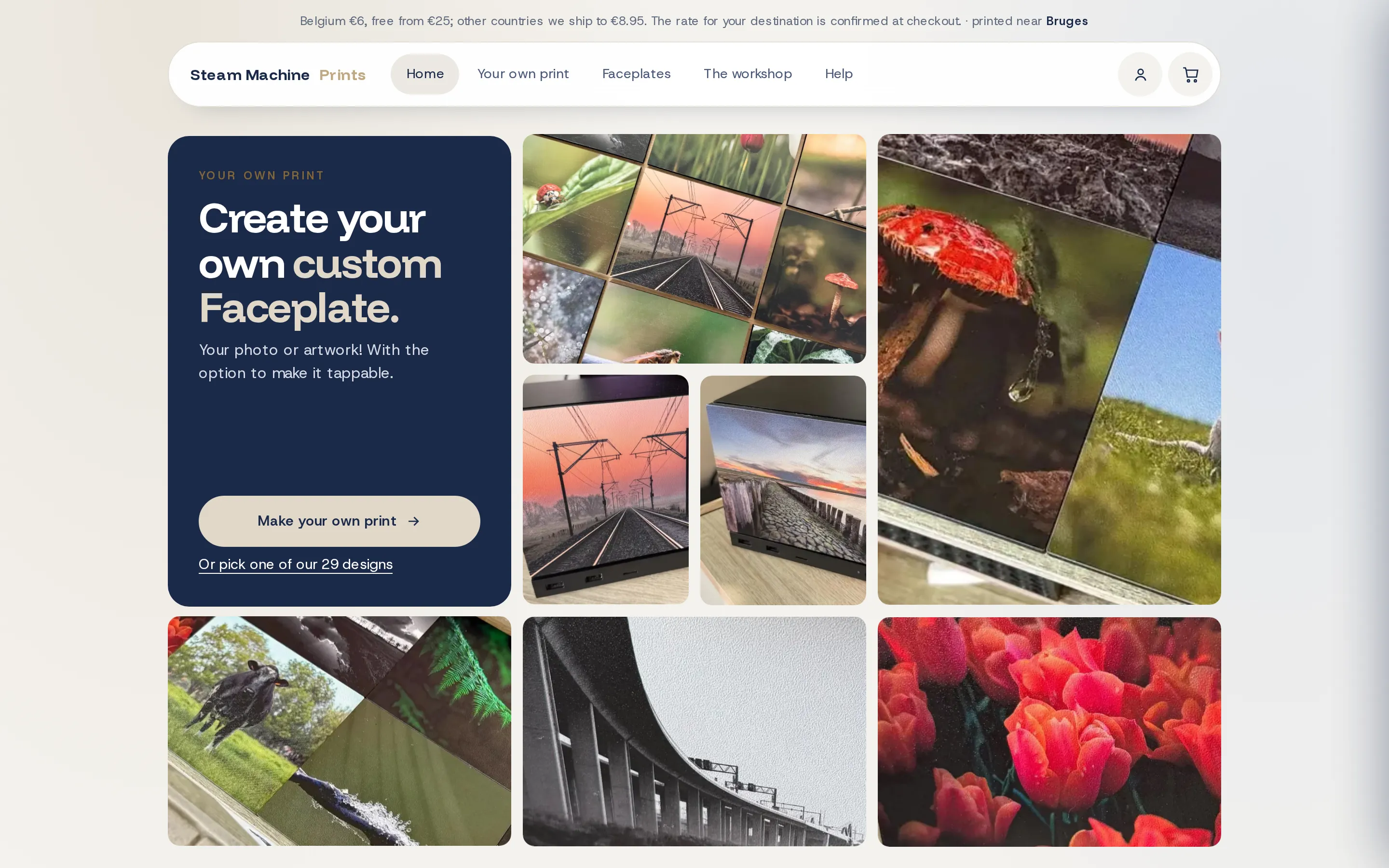
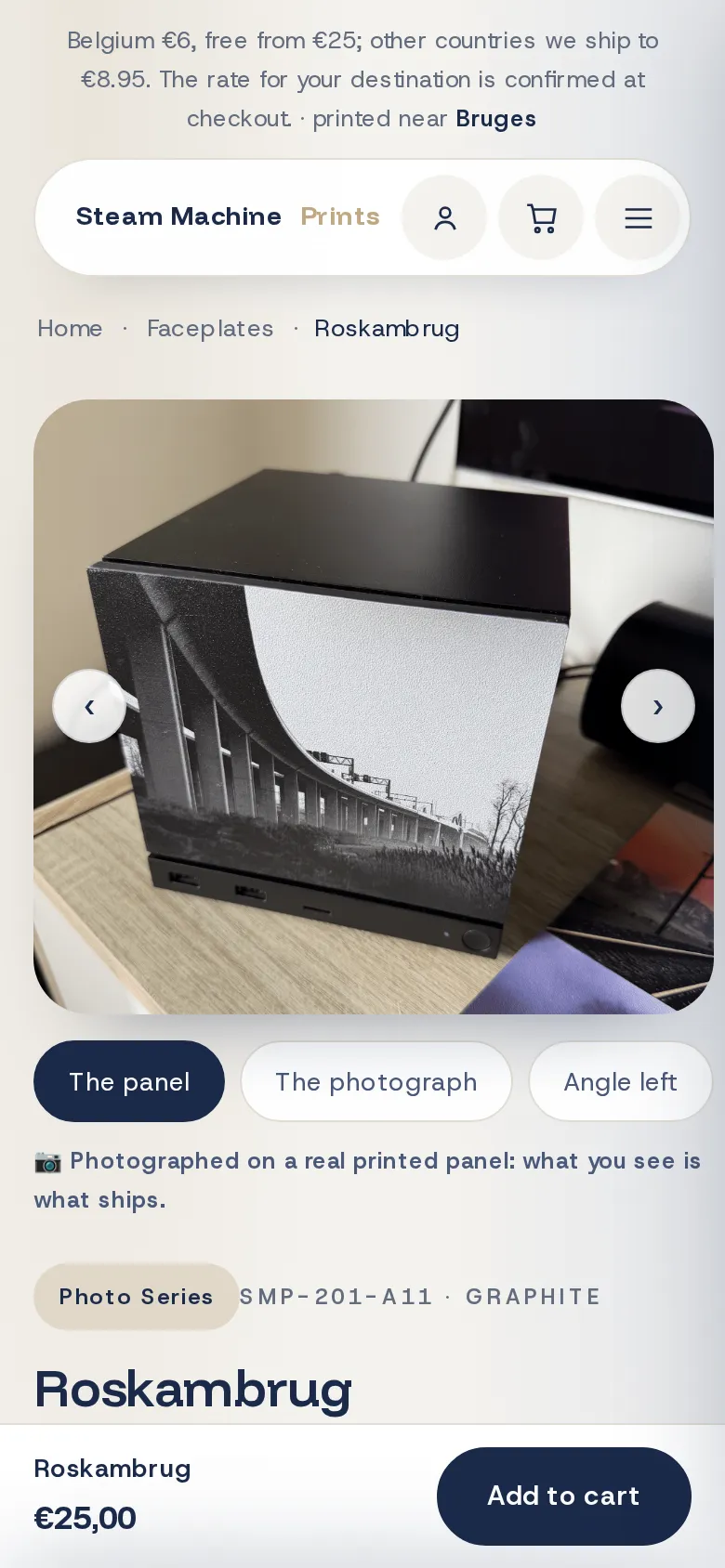
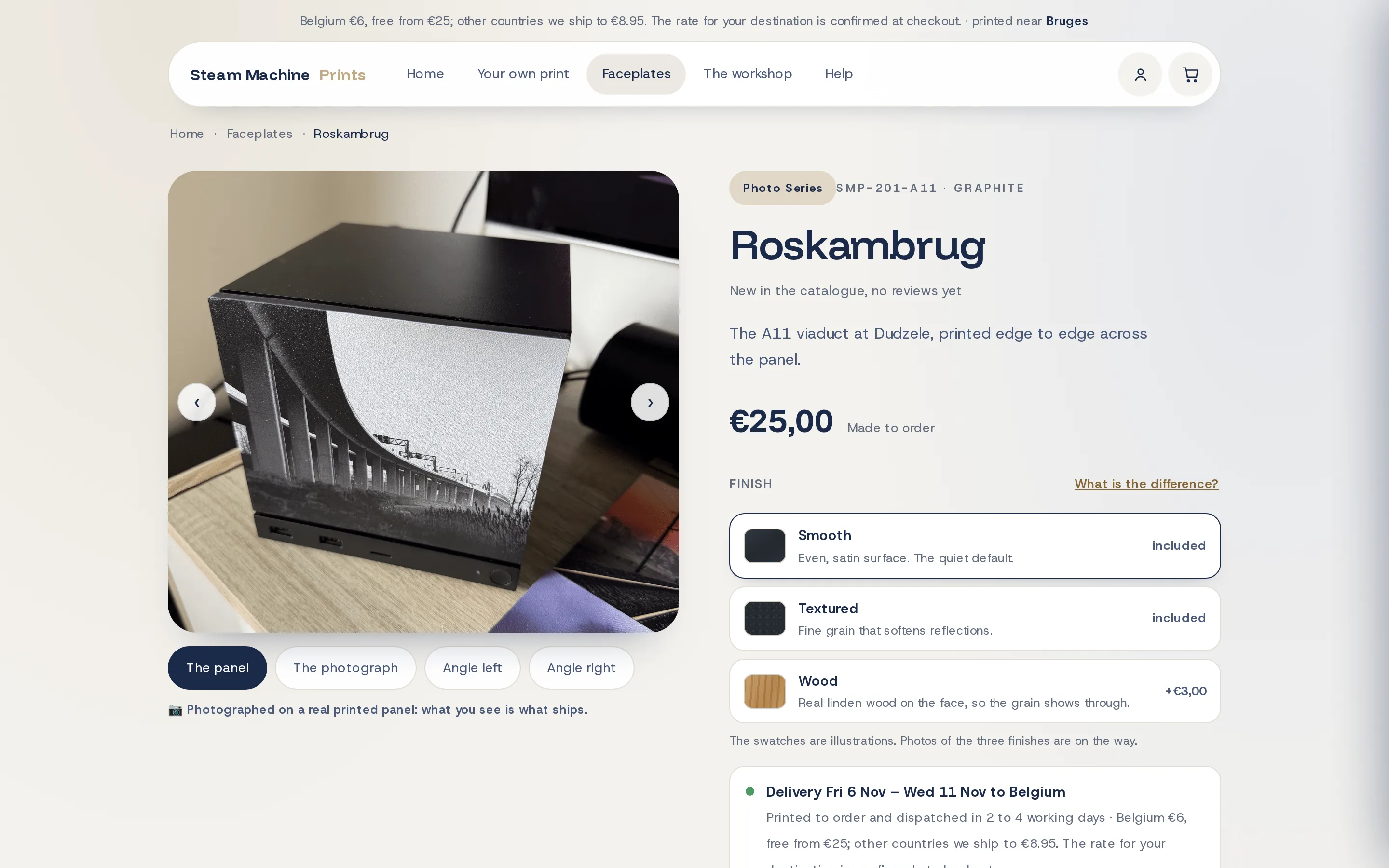
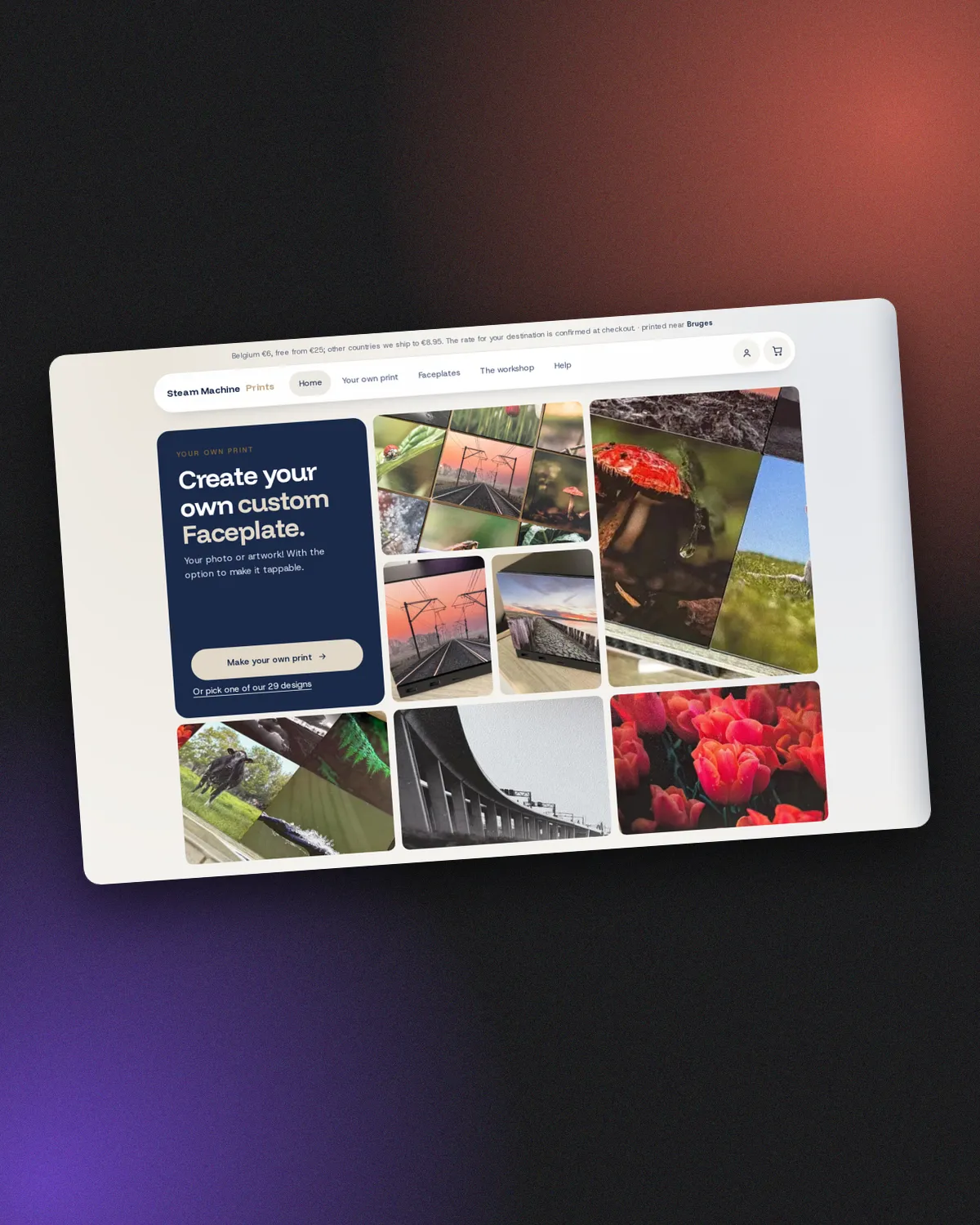
Steam Machine Prints is our own faceplate brand for the 2026 Steam Machine. It is an independent accessories label, not affiliated with the console maker. You pick one of our photographs, or upload your own, and we 3D print it as a faceplate in our workshop near Bruges. The shop went live at steammachineprints.com on 20 September 2026, and it runs on the same backend as our Flowz.Studio shop.
The challenge
Flowz.Studio already had a catalogue, a checkout, shipping, payments and an atelier that makes things to order. A second brand needed its own domain, look and voice, and a different product: faceplates instead of magnets. Building a second shop from scratch would mean a second checkout to keep secure, a second set of legal pages, consent, and twice the operations. And customers of one brand should never notice the other.
What we built
Steam Machine Prints has its own Astro storefront. It shares the Medusa commerce backend with Flowz.Studio. A brand module and a sales channel per brand keep the catalogues apart. Orders, payments, shipping and the admin stay in one place, so the team runs two shops from one dashboard.
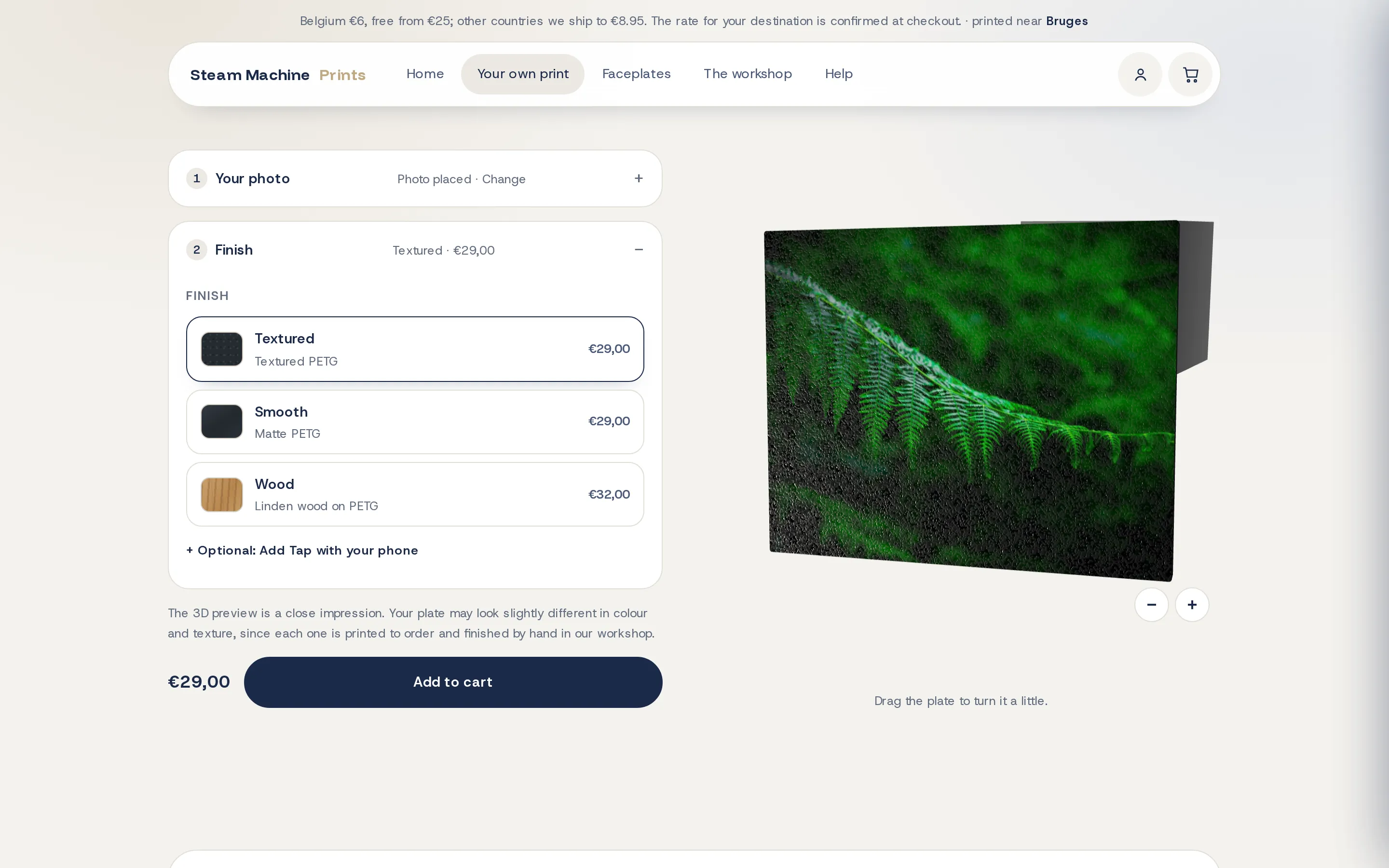
The heart of the shop is the Your own print builder. You choose a photo, then drag and zoom it into the frame of the plate. A 3D model of the faceplate on the machine shows the result, and you can turn it with your finger or mouse. The Textured, Smooth and Wood finishes each show their price, and you can make the plate tappable with your phone. Every photo is checked by hand before it goes to the printer.
The checkout, the consent banner and the legal policy come from a shared commerce package, so a fix in one shop reaches both. Each brand still keeps its own cart, cookies and storage, and tests prove that nothing leaks from one to the other.
Deep dive: the stack
The storefront is Astro with server rendering. React and Three.js are used only on the builder page, so every other page ships almost no JavaScript. The browser never talks to Medusa directly: a same-origin proxy adds the store key on the server. Prices and stock come live from Medusa per variant. Payments run through Stripe, with cards, Bancontact and iDEAL. Shipping runs through Sendcloud. Customer photos go to private storage only when the plate is added to the cart, and the workshop fetches them with short-lived links. Before payment, the backend checks the amount against the cart, so an order can never be paid at an old price.
How we work
The launch had a written GO/NO-GO checklist: code, tests, configuration, legal and shipping, each with its owner and its evidence. AI agents did the build work and every pull request went through code review, a security review and an automated test gate. Across the two storefronts that gate now runs more than 9,000 automated tests, and the backend adds about 3,400.
Where it stands
Steam Machine Prints is live and ships to eight European countries, printed to order and dispatched in a few working days. Adding the brand cost one storefront, not a second shop. If you run several brands, or plan to, ask us what one shared backend could do for your shops.
Technologies
- Astro
- React
- Three.js
- Medusa
- PostgreSQL
- Redis
- Stripe
- Sendcloud