Flowz Studio
Our own gift atelier, and the commerce and production platform we built to run it
- Role
- Our own product
- Sector
- E-commerce & manufacturing
- Service
- Digital Product Development
The work
- Astro storefront
- Medusa commerce backend
- Four product builders
- Multi-brand platform
- Creator production studio
-
8
countries we ship to
-
4
languages from one codebase
-
1,100+
products managed in Creator
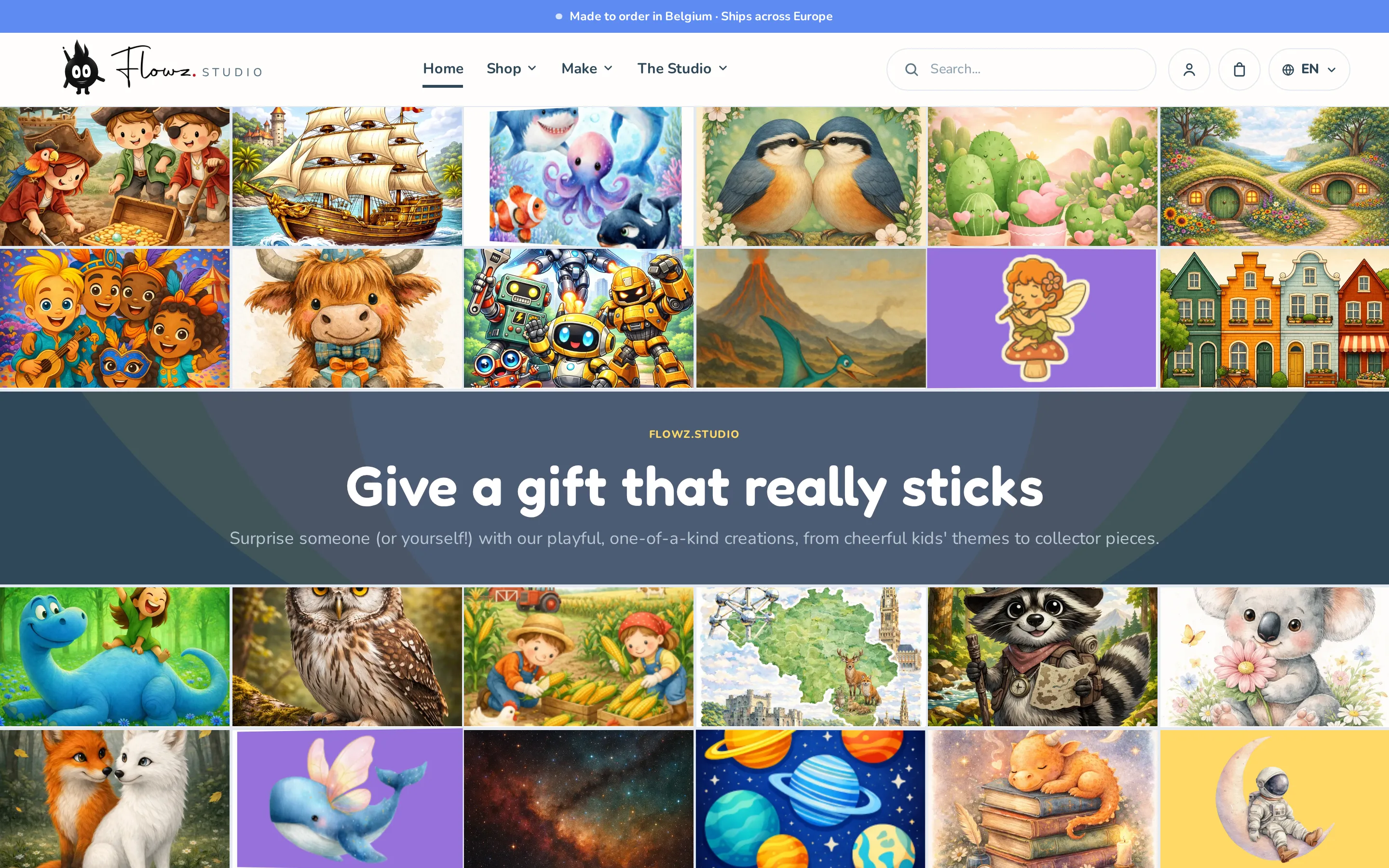
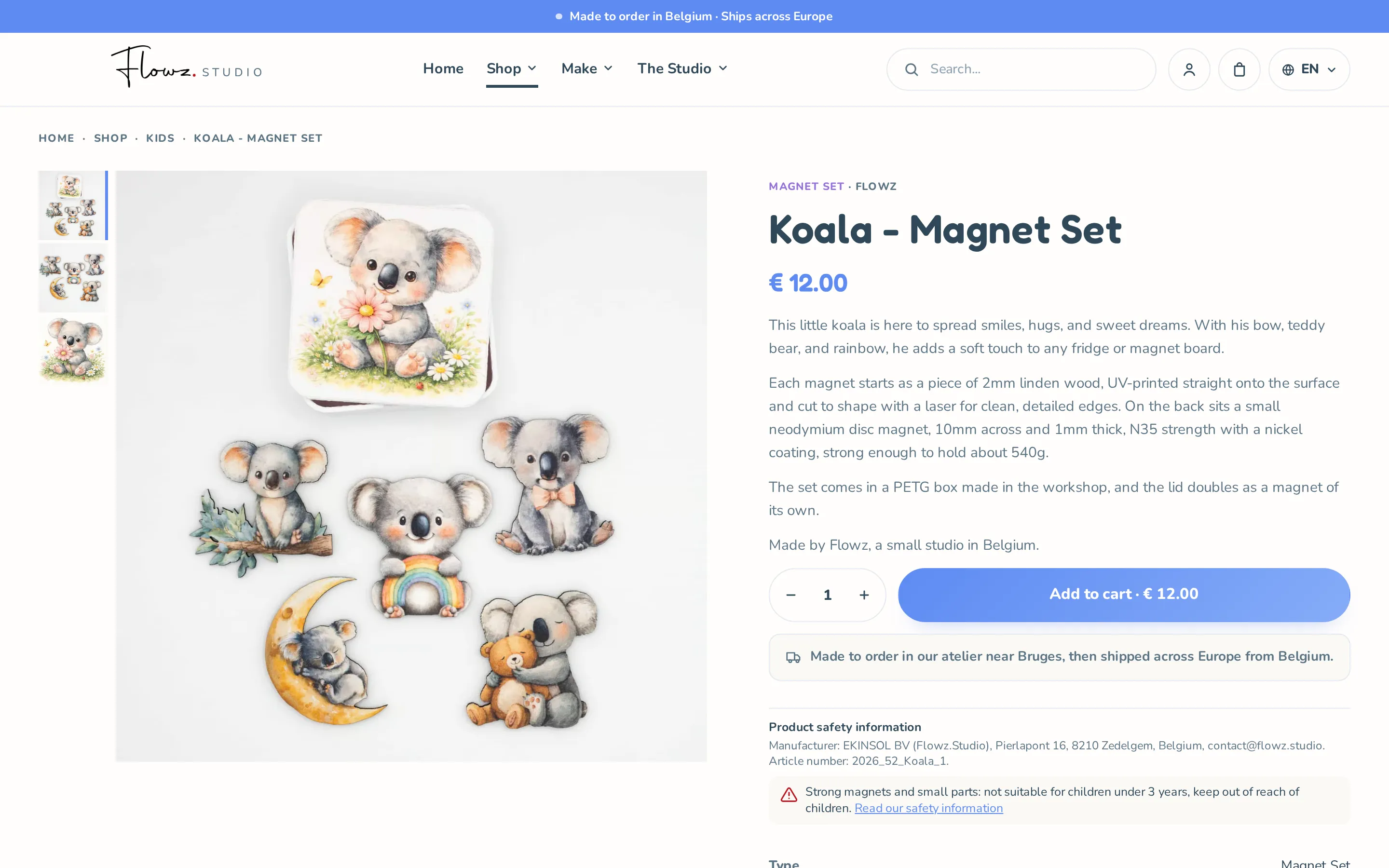
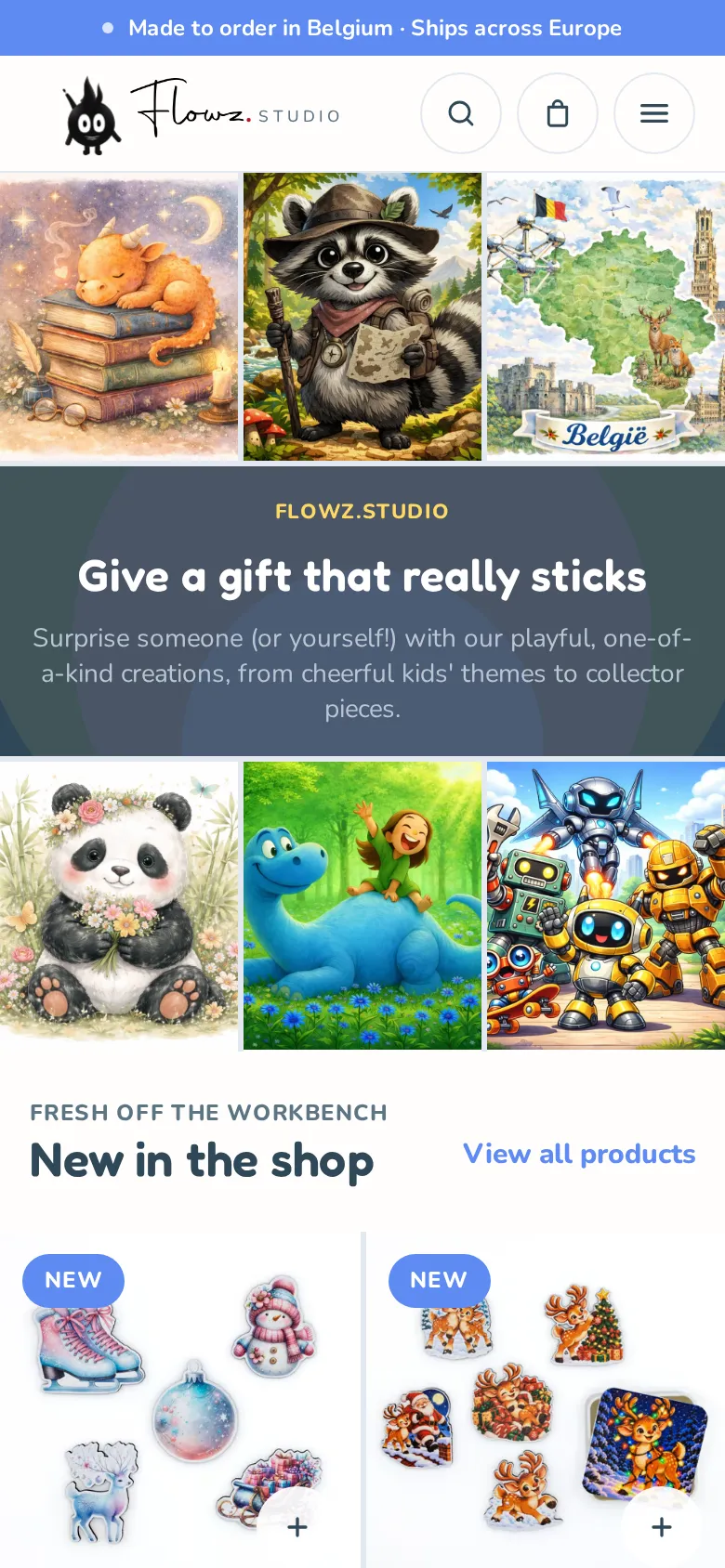
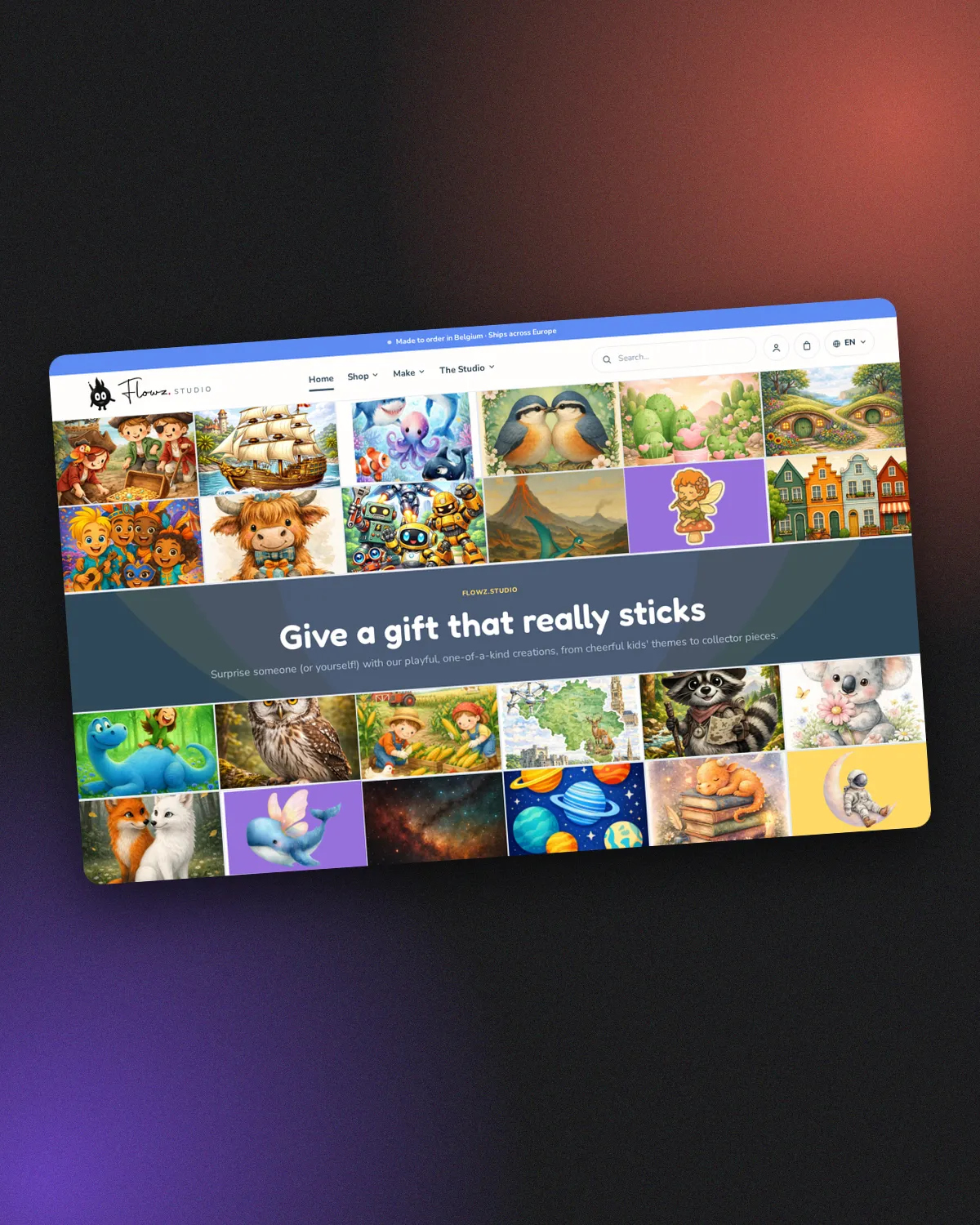
Flowz Studio is our own atelier near Bruges, and our own brand. We make personalised gifts by hand: magnet sets in linden wood, gift boxes you fill yourself, photo prints and photo keychains. Since September 2026 they sell across Europe from one international store, flowz.studio, in English, Dutch, German and French. Every part of it runs on software we built ourselves, from the storefront to the files that go to the UV printer and the laser cutter. Whenever we advise a client on e-commerce, this is where that advice was tested first.
The challenge
Flowz started on flowz.be, a Belgian shop on headless WooCommerce. It worked, until we wanted more than one country, more than one brand and products that customers design themselves. Each new language meant copied pages. A second brand meant a second shop. And a design that a customer made in the browser had to survive the cart, the payment and the trip to the workshop without anyone retyping a name or redrawing a photo.
What we built
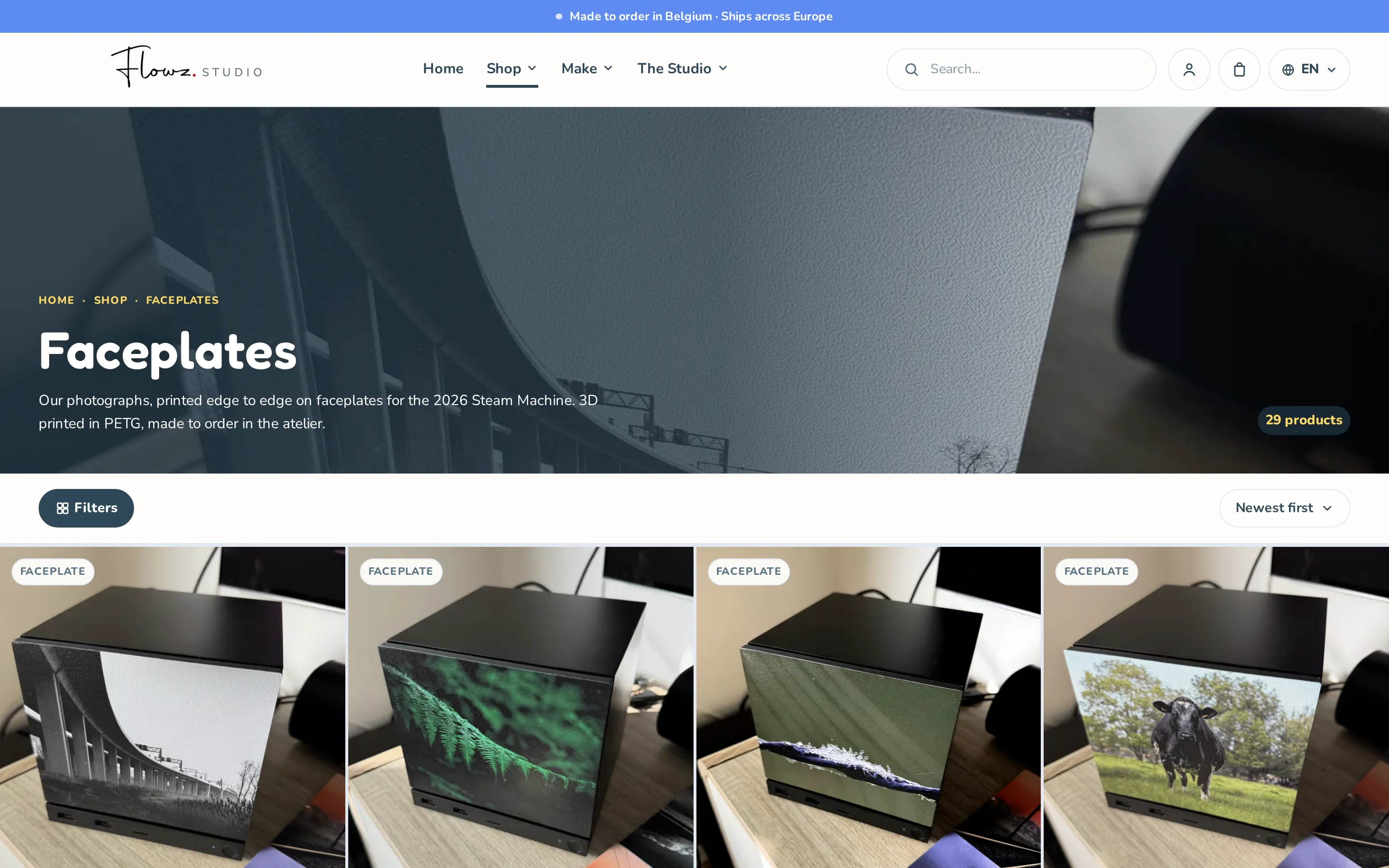
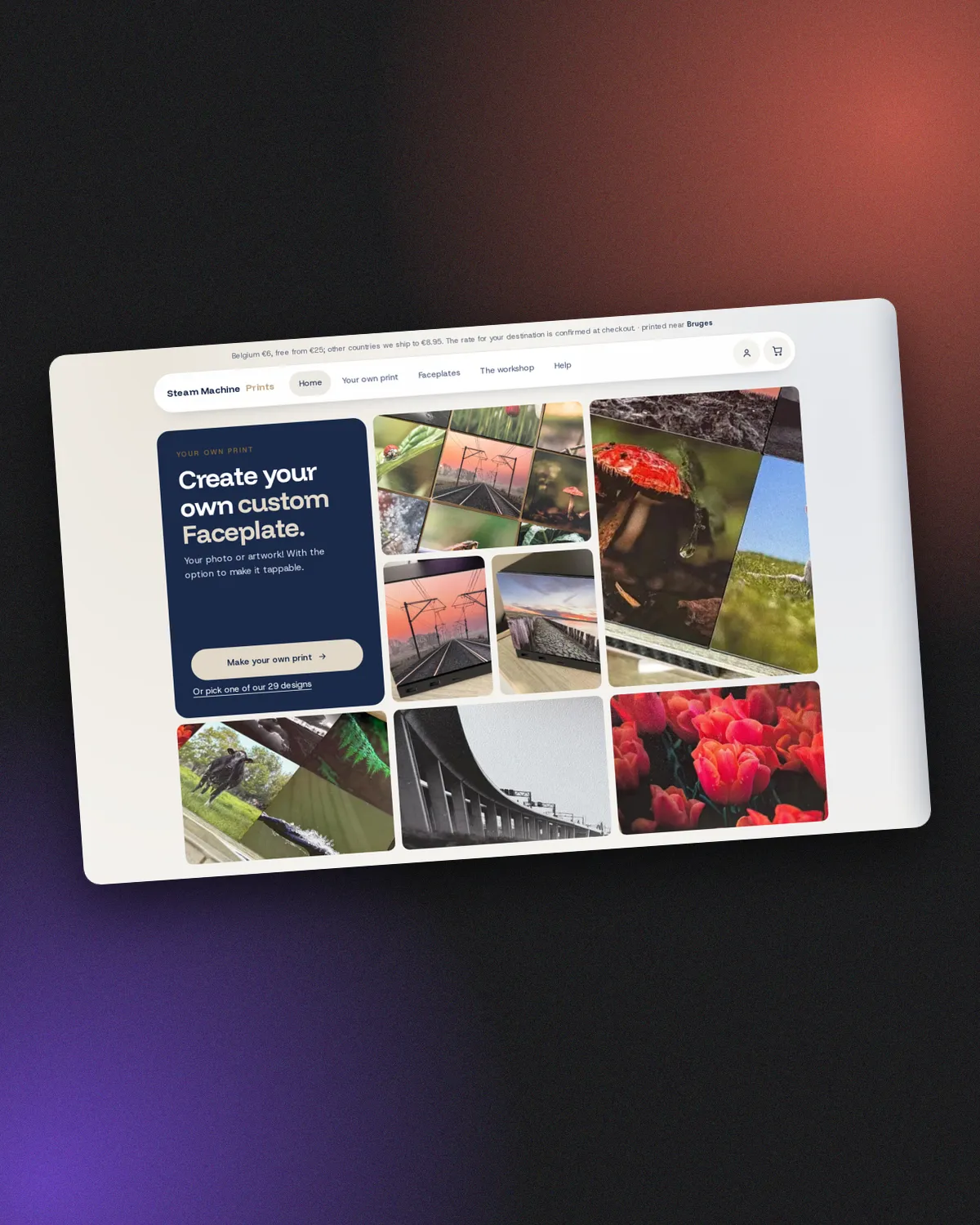
We rebuilt the shop on a new foundation. Medusa is the commerce backend, with one catalogue, one checkout and a sales channel per brand. A single Astro storefront serves four languages from the same pages, and the same code also runs our second brand, Steam Machine Prints. flowz.studio opened on 11 September 2026, and flowz.be now forwards to it, with old product links redirected so nothing breaks.
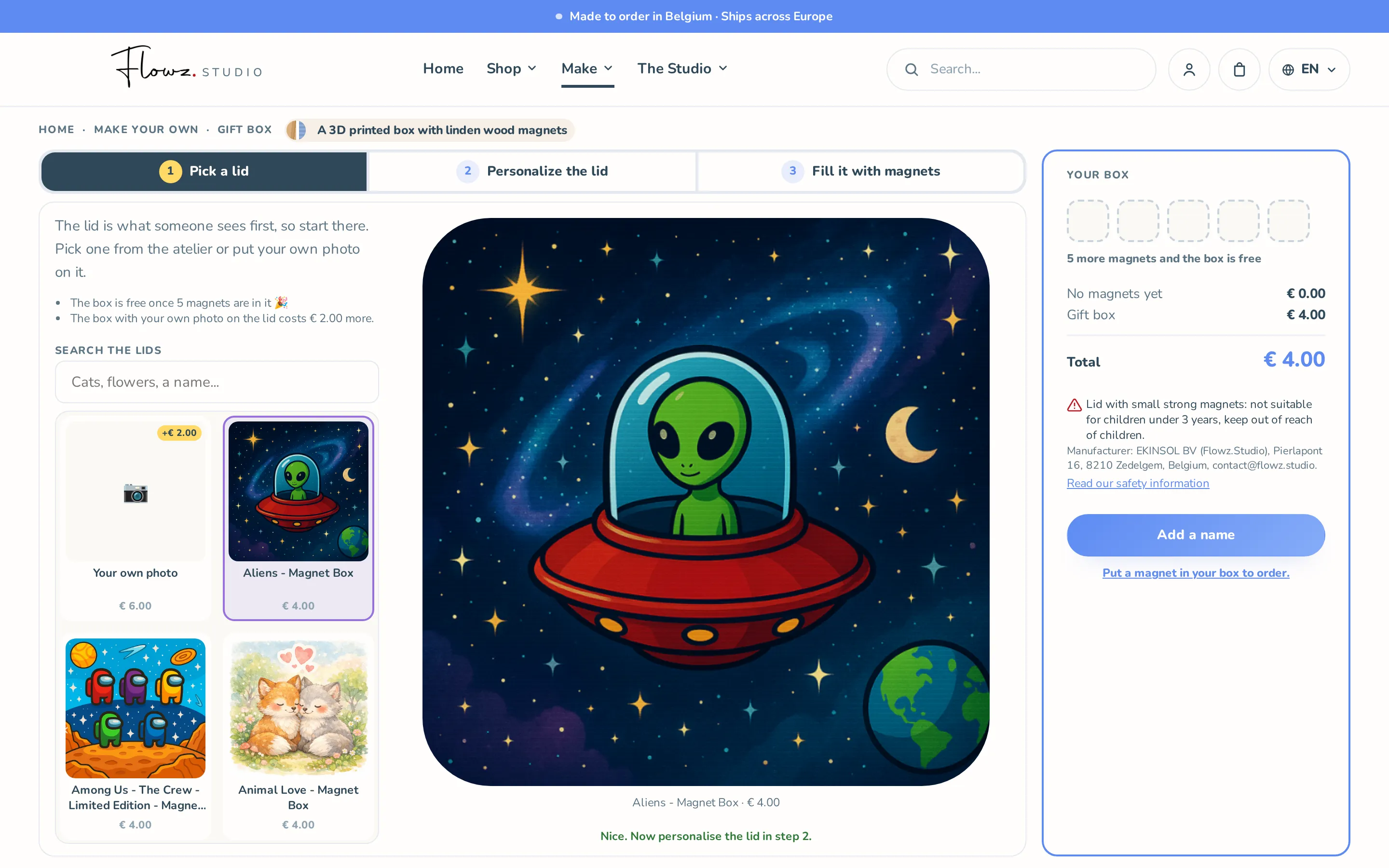
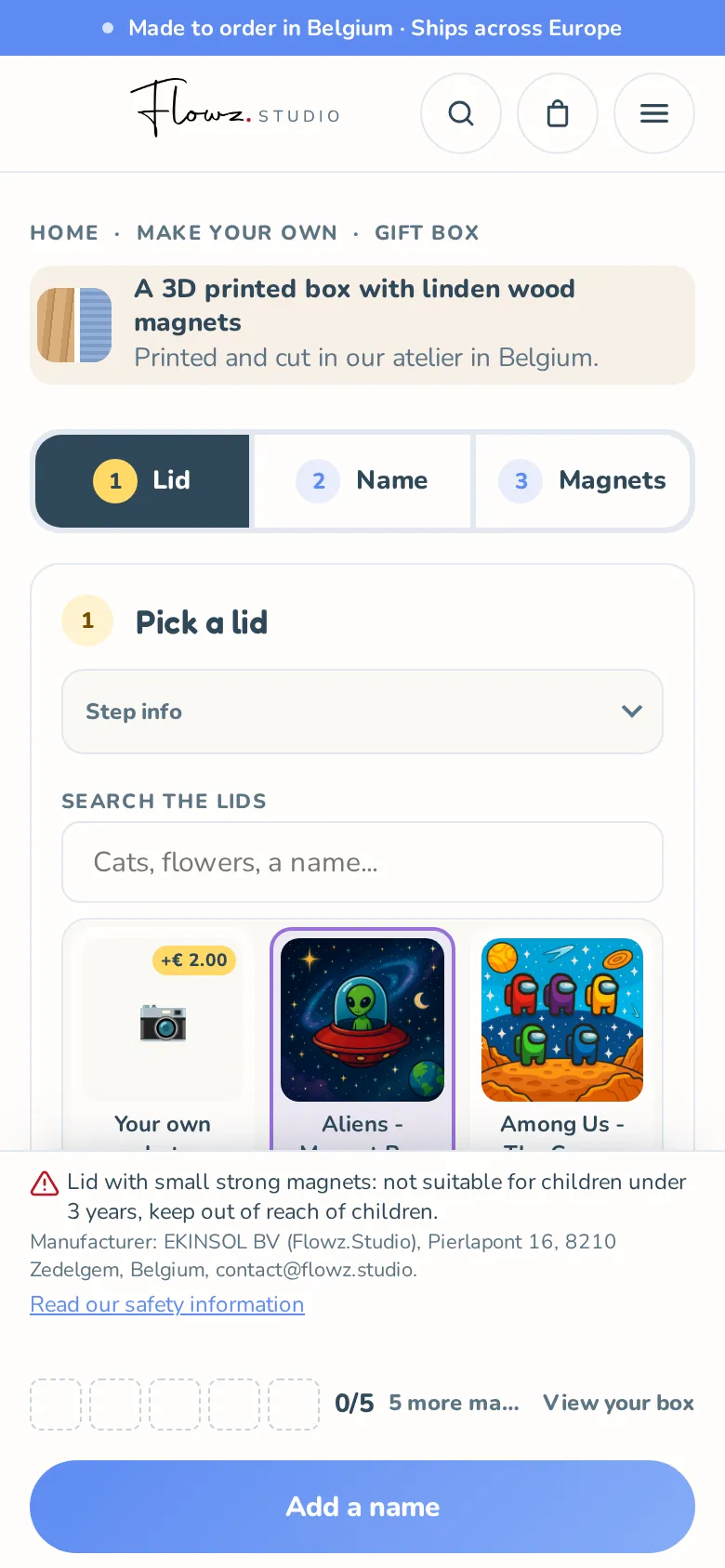
The builders are the heart of the shop. Customers fill a gift box with five magnets and put their own photo on the lid, turn a photo into a linden-wood magnet cut out around the subject, print a photo on wood or on a 3D-printed plate, or make a keychain printed on both sides. The design travels with the order line as structured data (photo, crop, text, font, colours), and the backend checks it and the price before the customer pays.
Creator: from design to production file
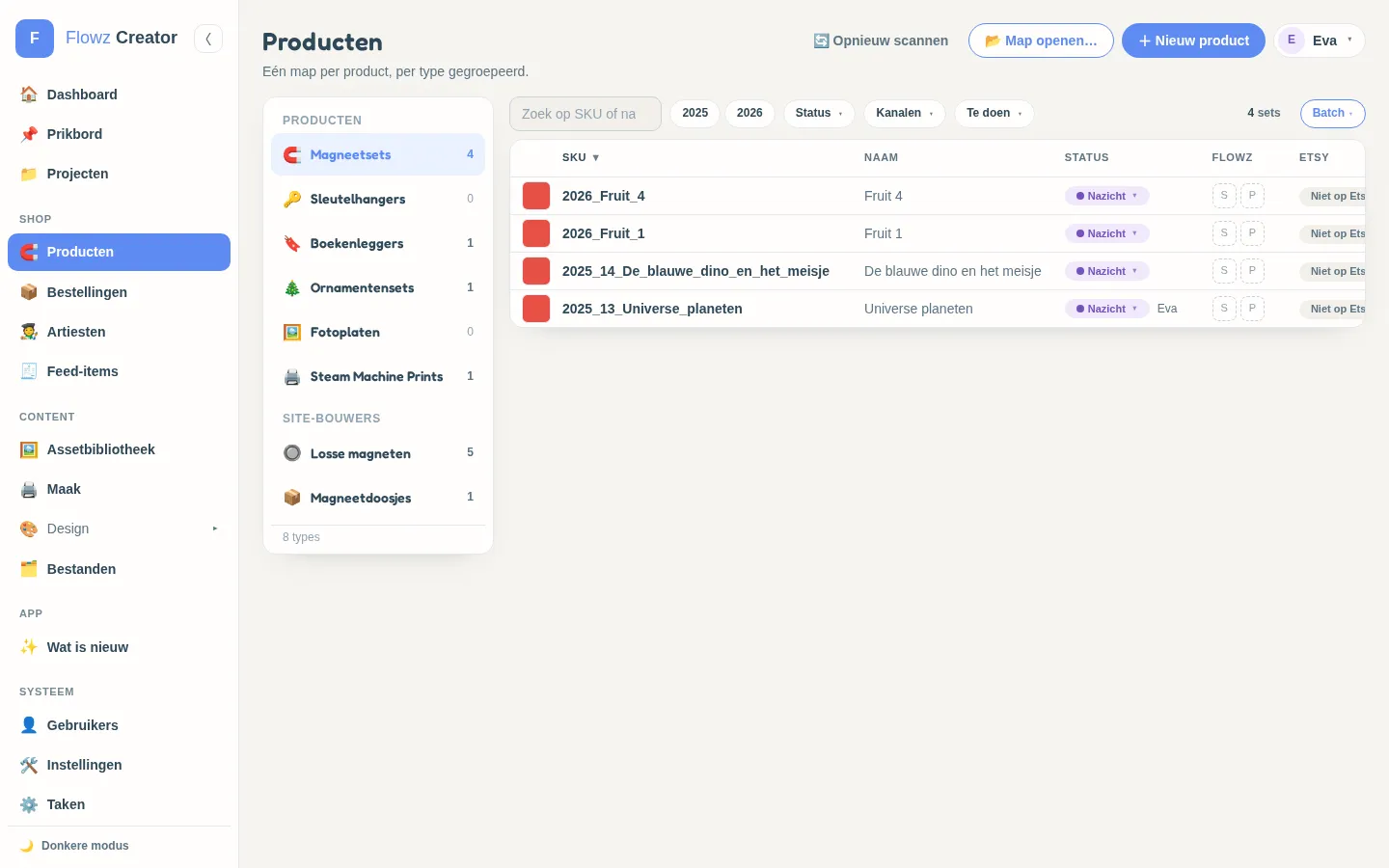
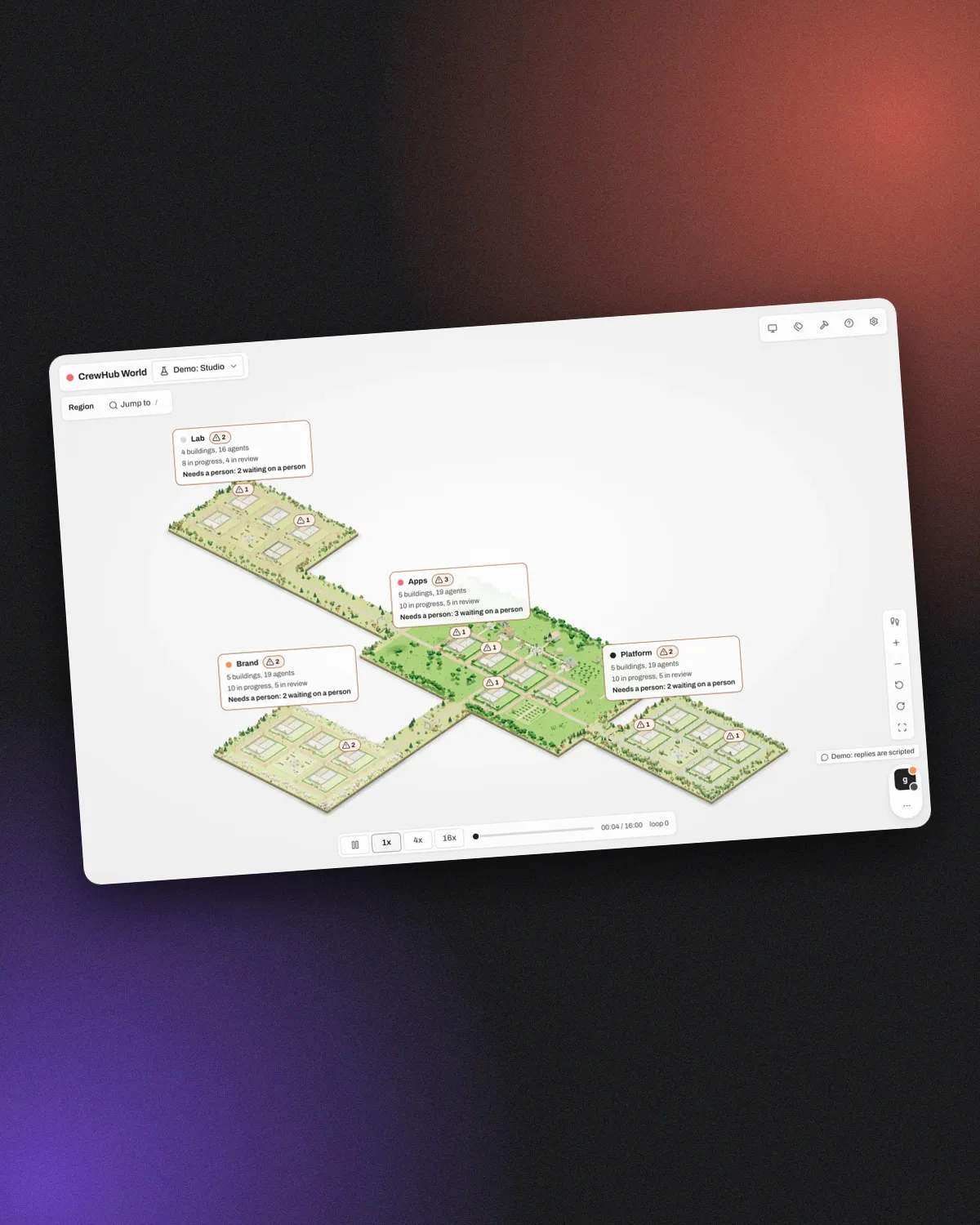
Behind the shop sits Creator, the internal studio where every product is made. Each product is one folder with one record, and Creator takes it from idea to online:
- Design. Our own artwork, or a design from the studio’s AI tools, used only on images where that is allowed.
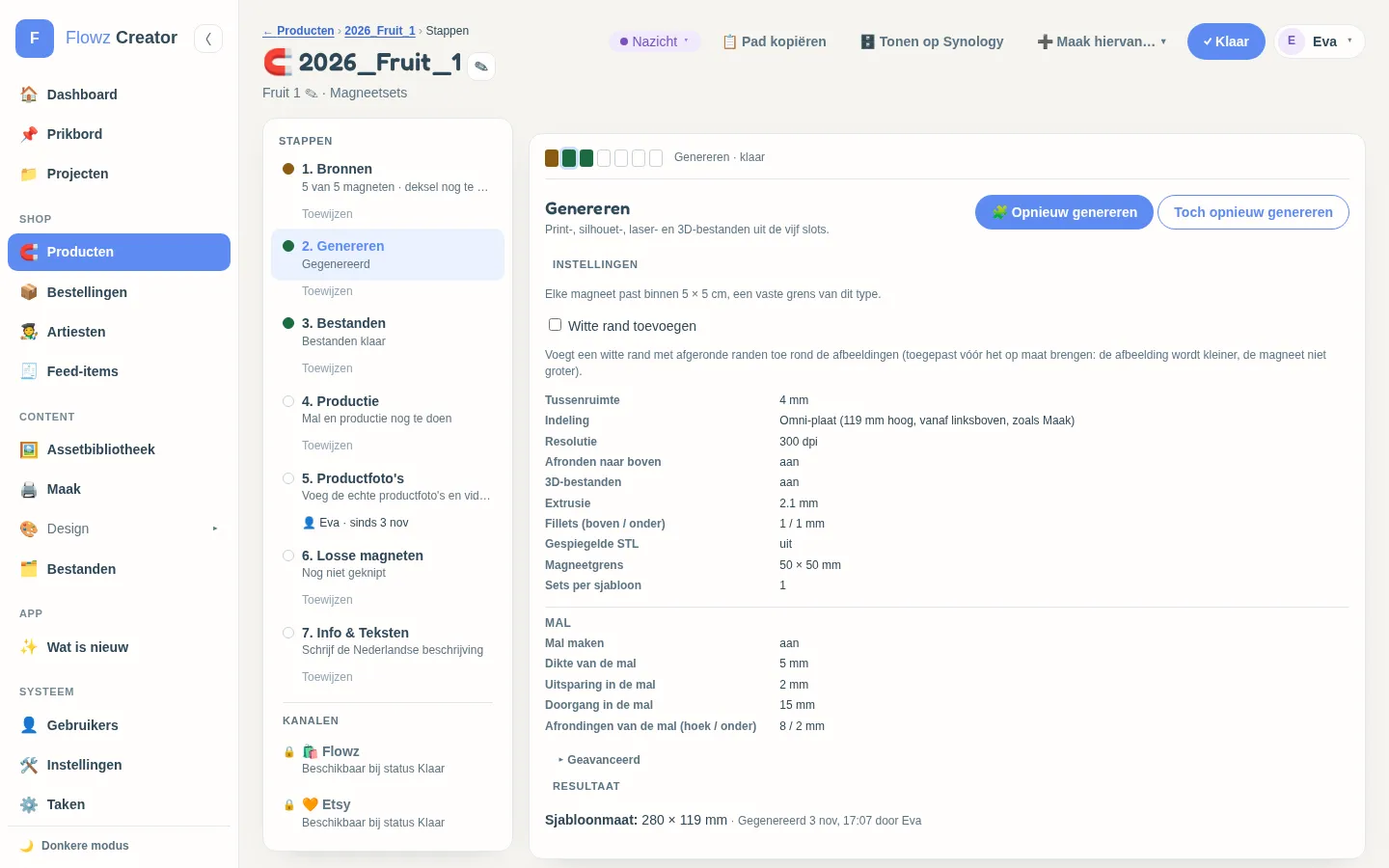
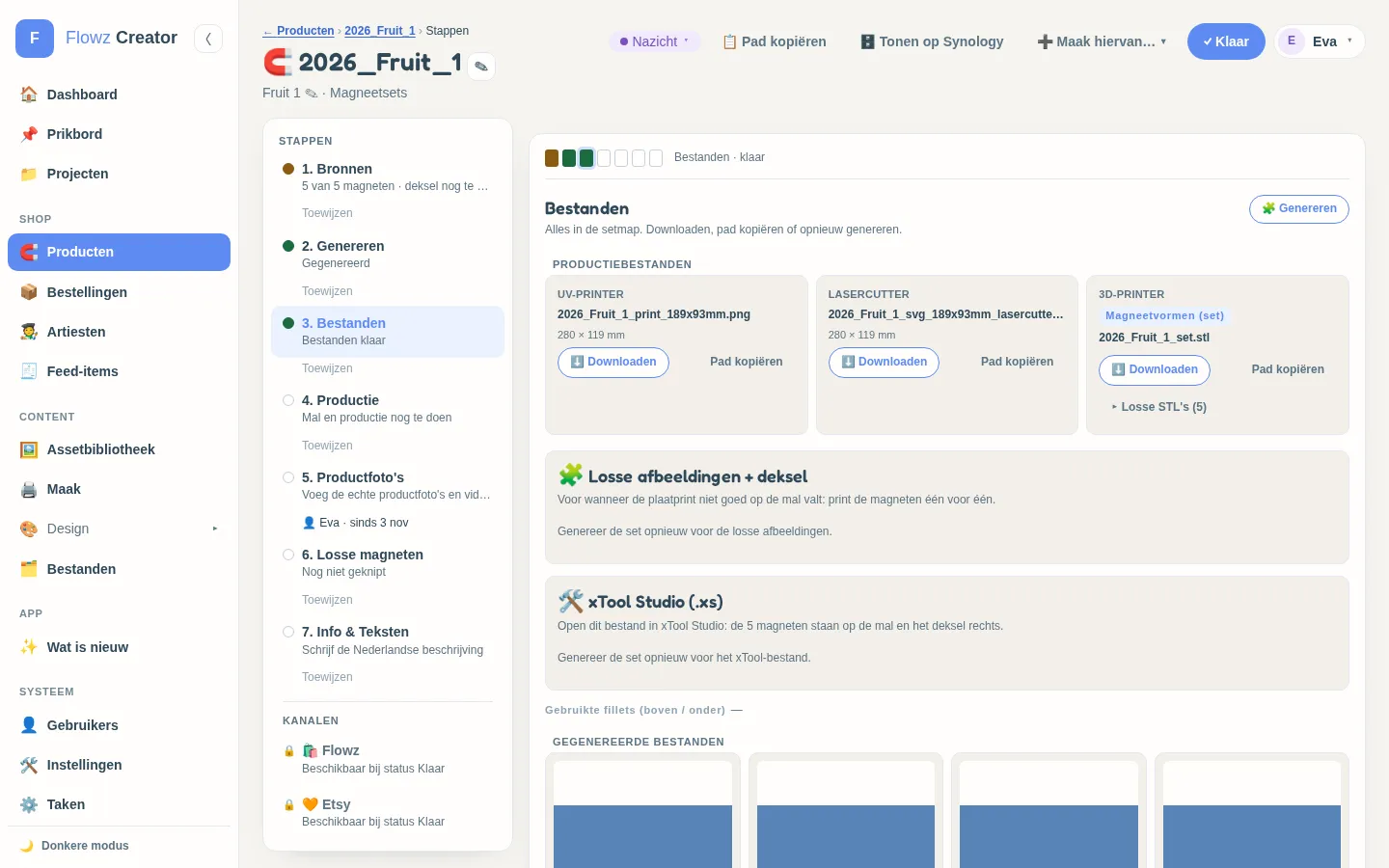
- Production files, generated. For every production sheet Creator writes the UV print file, the white layer, the laser cut line, the print jig and the laser project, plus a 3D model per piece for 3D printing. Checks flag parts that are too thin, a hanging hole in the wrong place or a resolution that is too low.
- Copy. AI drafts the product text from fixed product facts and translates it from Dutch. A person reads and approves it.
- Publishing. Products go to the webshop and to Etsy. A test store comes first, and the live store only changes on a deliberate click by a person, through a strict gate that lets only allowed changes through.
Customer orders take the same road back. Creator turns the design from a builder into the production file, for example the printed lid with the customer’s own text, ready for the laser. The machines do the repetitive work. People do the design, the photos, the review and the final click.
Deep dive: the stack
The storefront is Astro, rendered on the server, with React only where it earns its place: in the builders. The browser never talks to the commerce backend directly. A same-origin proxy adds the keys on the server, so they never reach the browser. Medusa 2 runs on PostgreSQL and Redis, with Stripe for payments (Bancontact and iDEAL included), Sendcloud for parcels, and a brand module that keeps two brands apart in one catalogue. Everything runs in containers on our own servers through Coolify, with Cloudflare in front.
Creator is a React web app on a FastAPI backend. The heavy work runs as background jobs: CAD for the 3D models and jigs in build123d, and image processing in Python. It runs in Docker and is tested in full every night.
How we work
Flowz is where our method proves itself on our own money. Features start as written specs, AI agents do the build work, and nothing ships before review and an automated test gate. The storefronts carry more than 9,000 automated tests and the backend about 3,400, and they run before every release. Creator went from first commit to more than 1,100 products in about six weeks, across nine product types.
Where it stands
Flowz Studio sells and ships to eight countries today, in four languages, with two brands on one platform. When we propose an architecture for your shop, or a tool that takes the manual work out of your production, it is one we run our own revenue on.
Technologies
- Astro
- React
- Medusa 2
- PostgreSQL
- Redis
- Stripe
- Sendcloud
- FastAPI
- Python
- build123d
- Cloudflare
- Coolify